
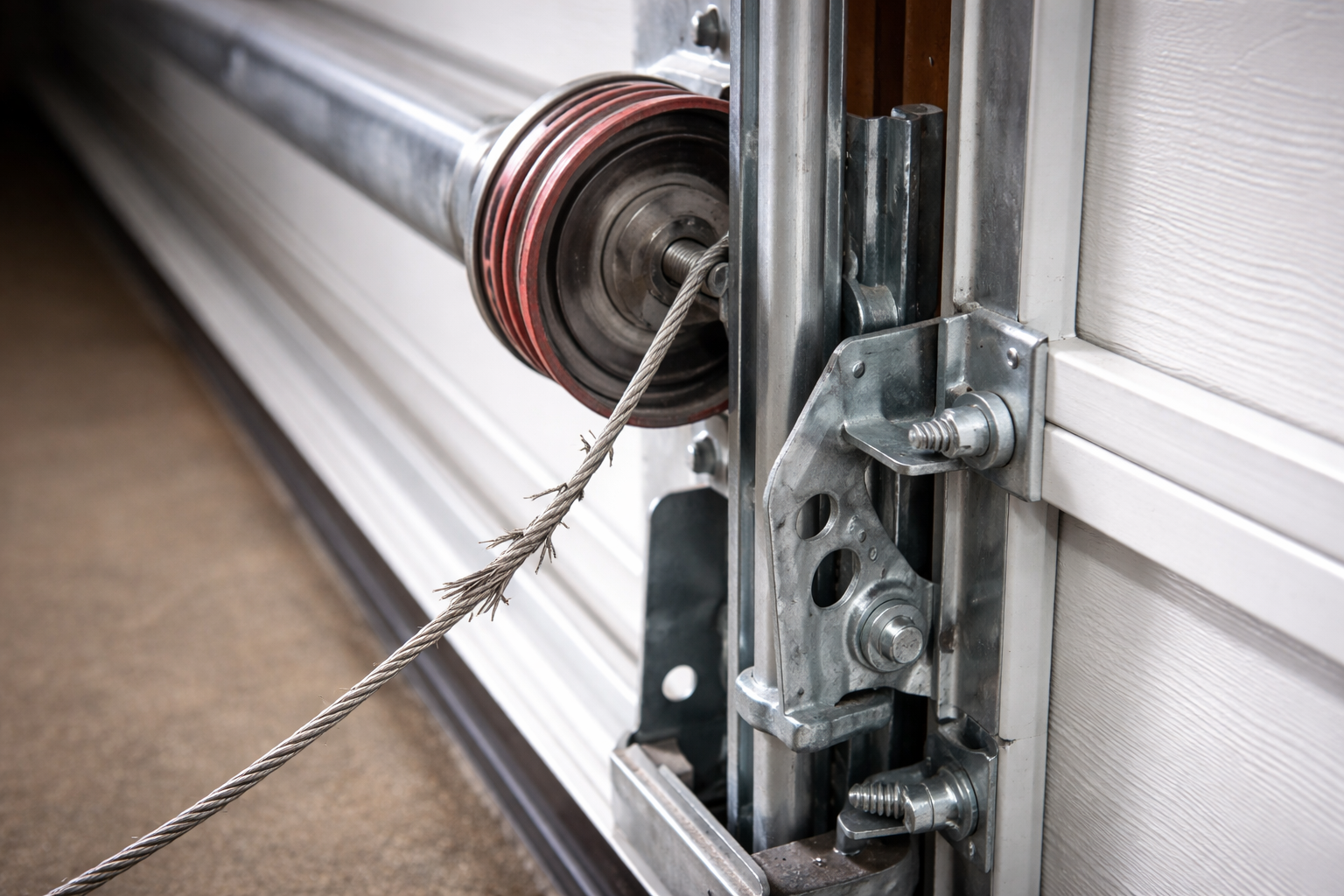
When homeowners think about garage door safety, springs usually get all the attention. But there’s another critical component doing just as much heavy lifting behind the scenes: the garage door lift cables. These steel cables work in constant tension every time your door opens and closes, quietly bearing the door’s weight. Unfortunately, they often fail without much warning.
Understanding when you need garage door cable repair, how to spot early warning signs, and why DIY fixes are extremely dangerous can help you avoid serious injury and costly property damage.
What Do Garage Door Cables Do?
Garage door cables are thick, braided steel wires that connect the bottom of the door to the spring system. Their job is simple but critical: they carry the door’s weight as the springs counterbalance it. Without properly functioning cables, your garage door cannot lift evenly or safely.
Because cables are under constant tension and exposed to moisture, dirt, and friction, they wear down gradually. Unlike springs, which often break suddenly and loudly, cables tend to fray silently, making them easy to overlook until a serious failure occurs.
Torsion vs. Extension Cables: What’s the Difference?
There are two main types of garage door cable systems:
- Torsion spring cables are mounted on doors with a torsion bar above the opening. The cables wrap neatly around metal drums at the ends of the bar. These systems are common on newer or heavier doors and are under extremely high torque.
- Extension spring cables run along the sides of the garage door and stretch as the door moves. While they look less intimidating, they are just as dangerous when damaged or improperly handled.
In both systems, the cables are under enough tension to cause severe injury if they snap or are released incorrectly.
Warning Signs Your Garage Door Cables Are Failing
Knowing what to look for, without touching the cables, can help you catch issues early.
- Frayed or Rusted Cables: If you see loose strands, thinning areas, or rust buildup, you may need frayed garage door cable replacement. Even minor fraying weakens the cable and dramatically increases the risk of snapping.
- Garage Door Is Crooked on One Side: When one cable fails or slips, the door lifts unevenly. A garage door that looks crooked or jammed partway up is a major red flag and should not be operated.
- Garage Door Cable Came Off Drum: If a cable slips off its drum, it usually means there’s uneven tension, wear, or a failing spring. This issue can cause the door to bind, tilt, or suddenly drop.
- Jerky or Noisy Operation: Grinding, popping, or uneven movement can indicate cable alignment issues or internal wear.
If you notice any of these signs, stop using the door immediately.
Why a Snapped Cable Causes the Door to Jam or Tilt
Garage doors are designed to lift evenly on both sides. When one cable snaps or slips, the entire system becomes unbalanced. One side of the door continues to lift while the other stays down, causing the door to wedge itself in the tracks.
This is why cable failures often lead to doors getting stuck halfway open, or worse, slamming shut unexpectedly. The remaining cable and spring suddenly bear more weight than they were designed for, increasing the risk of total system failure.
The Extreme Danger of DIY Garage Door Cable Repair
Attempting DIY garage door cable repair is one of the most dangerous things a homeowner can do.
Garage door cables are directly connected to springs that can hold hundreds of pounds of force. Touching, loosening, or attempting to rewind cables without proper tools and training can result in:
- Severe lacerations from snapping cables
- Broken fingers, hands, or arms
- Head and facial injuries
- A garage door crashing down unexpectedly
Even experienced DIYers are often injured because cable tension is invisible. What looks like a simple fix can turn catastrophic in seconds.
There is no safe DIY method for cable repair.
Why Professional Repair Is the Only Safe Option
Professional technicians are trained to safely release spring tension, reset cable alignment, and replace worn components using specialized tools. Proper cable repair also involves inspecting the drums, springs, tracks, and bottom brackets to ensure the entire system is balanced.
Addressing the root cause, not just the cable itself, prevents repeat failures and protects your door, opener, and home.
FAQs About Garage Door Cable Repair
Can I still use my garage door if a cable is frayed?
No. Frayed cables can snap at any time. Continued use greatly increases the risk of injury or total door failure.
Why did my garage door cable come off the drum?
Common causes include cable wear, improper tension, spring issues, or track misalignment. This problem requires professional correction.
Is cable replacement expensive?
Compared to the cost of a damaged door—or medical bills—professional cable repair is relatively affordable and well worth the safety investment.
How often should garage door cables be inspected?
Cables should be visually inspected at least once a year and anytime the door starts operating unevenly or noisily.
Can one cable be replaced without the other?
In most cases, both cables are replaced together to maintain proper balance and prevent future issues.
Why Prompt Garage Door Cable Repair Matters
Garage door cables may not get much attention, but when they fail, the consequences are immediate and dangerous. If you notice fraying, uneven lifting, or a cable off its drum, stop using your door and call a professional at Goody Garage Doors at (602) 607-2226 right away. When it comes to garage door cable repair, safety should never be a DIY project.